The Nissan Clipper nameplate has been used for two separate commercial vehicle ranges. Originally this was just a relabelled version of Prince's "Clipper" light/medium duty commercial vehicle range. In 2003 the nameplate was revived for a relabelled version of the Mitsubishi Minicab, a Kei truck provided in an OEM deal. This had begun with the AKTG Prince Cabover truck of May 1954, with the Clipper label first introduced on the 1.5-litre AQTI series of October 1958.[1] The Clipper featured a distinct frontal treatment, with six oval openings for cooling. In February 1961, the BQTI "Super Clipper" with a larger 1.9-litre engine was added to the lineup. In January 1963 the modified T630/T631 Clipper/Super Clipper was introduced, featuring quadruple headlights. Engines remained the same as before, albeit with a bit more power: a 73 PS (54 kW) 1,484 cc four for the T630 and a 1,862 cc unit with 96 PS (71 kW) for the T631 Super Clipper. In April 1966, following the merger of Nissan and Prince's operations, the truck was renamed Nissan Clipper (T65). Again, the front treatment was unusual; the front featured four large chrome-ringed ovals, two of which were for cooling and two held the lights. The T65 also received a 1,982 cc Nissan H20 four-cylinder petrol engine. In January 1973 the new T40 series replaced the T631, but it was shortlived. The next (and last) generation Clipper was the C340 of May 1976, but this was merely a rebadged Nissan Caball. The line came to an end in December 1981, when Nissan's commercial truck range was rationalized. The H40 Nissan Atlas replaced both the Clipper and the Caball.
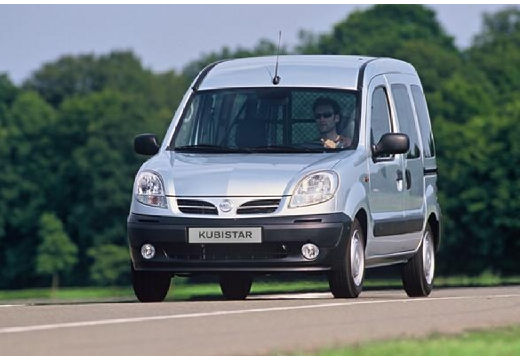
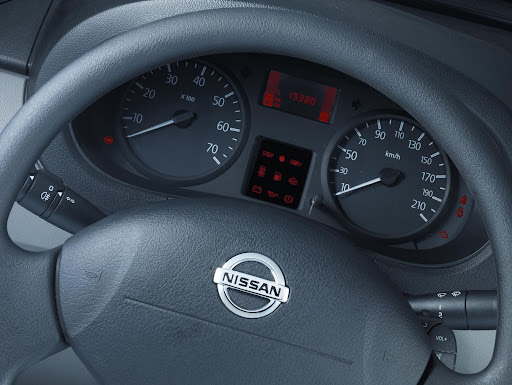
Nissan Kubistar On The Road Nissan Kubistar View Detail Elegant Nissan Kubistar Red Nissan Kubistar Concept Nissan Kubistar Droos Control Nissan Kubistar Front View Nissan Kubistar On Parking
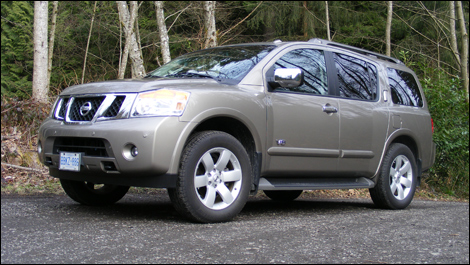
Nissan Armanda Front View Nissan Armanda Fast Car Driving Interior Nissan Armanda Elegant Silver Nissan Armanda Luxury Black Nissan Armanda Nissan Armanda Doors Control
The Nissan GT-R is a sports car produced by Nissan released in Japan on December 6, 2007, the United States on July 4, 2008, and the rest of the world in March 2009. 1969 and 1974, and again between 1989 and 2002, Nissan produced a high performance version of its Skyline range called the Nissan Skyline GT-R. This car proved to be iconic for Nissan and achieved much fame and success on road and track. The Nissan GT-R, although no longer carrying the "Skyline" badge, has heritage in the Nissan Skyline GT-R. Like the Skyline GT-Rs R32 through R34, the Nissan GT-R is all-wheel drive with a twin-turbo 6 cylinder engine; however, the evolutionary, incremental changes between Skyline models R32 through R34 have been done away with. The four-wheel-steering HICAS system has been removed, and the former straight-6 RB26DETT engine has been replaced with a new V6 VR38DETT.Because of the GT-R's heritage, the chassis code for the all-new version has been called CBA-R35,[9] or 'R35' for short (where CBA is the prefix for emission standard), carrying on the naming trend from previous Skyline GT-R generations. The GT-R has also retained its Skyline predecessor's nickname Godzilla. Two concept vehicles were displayed at motor shows prior to the unveiling of the production model. The first concept was shown at the Tokyo Motor Show in 2001 to preview what a 21st century GT-R would look like. At the 2005 Tokyo Motor Show, Nissan unveiled a redesigned concept, the GT-R Proto, stating that the production GT-R would be 80-90% based on this concept. The production version of the GT-R debuted at the 2007 Tokyo Motor Show, launching in the Japanese market on December 6, 2007. The U.S. official launch was 7 months later on July 7, 2008. Universal Nissan in Los Angeles provided a customer with the delivery of a new GT-R, fresh from the production line at 12:01 a.m., on July 7, 2008. The Canadian launch was also in July 2008. Europe became the third consumer market, where it launched in March 2009. The large disparity in initial marketing between these regional releases is due to Nissan having to build GT-R performance centers where the car is serviced. Also the engine and rear-mounted dual-clutch gearbox are built by hand, thus limiting production to around 1000 cars a month. The revised GT-R (2012 model year for the US) features an engine with revised mapping, changes to valve timing, larger inlets and a revised exhaust system which boosts rated power to 530 bhp and 612Nm of torque from 3200 to 6000rpm. Changes also include a new more rigid front strut bar made from carbon composite, larger front brake rotors, new lighter and stiffer wheels, and revised Dunlop tires. Cosmetic changes include a new front bumper with integrated LEDs which adds cooling to the radiator and front brakes while reducing drag, a new rear diffuser which improves downforce, additional rear cooling ducts, and improved interior quality. The revised GT-R went on sale in Japan from mid November 2010 and February 2011 in North America, Europe and other regions.Nissan’s VP of global product planning Andy Palmer has confirmed that the current GT-R (R35) will be replaced by 2013. The Nissan GT-R is powered by the VR38DETT engine, a 3,799 cc (3.8 L; 231.8 cu in) DOHC V6 with plasma transferred wire arc sprayed bores. Two parallel Ishikawajima-Harima Heavy Industries (IHI) turbochargers provide forced induction. Production vehicles produce a manufacturer-claimed engine output of 485 bhp (362 kW) at 6400 rpm and 434 lb·ft (588 N·m) at 3200-5200 rpm. The engine also meets California Air Resources Board Ultra Low Emission Vehicle (ULEV) standards. A curb weight of 1,730 kg (3,800 lb) or 1,736 kg (3,830 lb) with side curtain airbags is achieved using a jig welded steel chassis with aluminum used for the hood, trunk, and doors A rear mounted six-speed BorgWarner designed dual clutch semi-automatic transmission built by Aichi Machine Industry is used in conjunction with the ATTESA E-TS system to provide power to all four wheels and along with Nissan's Vehicle Dynamics Control (VDC-R) to aid in stability. Three shift modes can also be selected for various conditions.
The Nissan Leaf (also formatted "LEAF" as a bacronym for Leading, Environmentally friendly, Affordable, Family car) is a five-door mid-size hatchback electric car manufactured by Nissan and introduced in Japan and the U.S. in December 2010. The United States Environmental Protection Agency determined the range to be 117 kilometres (73 mi), with an energy consumption of 765 kJ/km (34 kWh per 100 miles) and rated the Leaf's combined fuel economy at 99 miles per gallon gasoline equivalent. Deliveries began in the United States on December 11, 2010, and on December 22 in Japan. Sales are scheduled to begin in Portugal in January 2011, Ireland in February, the United Kingdom in March, and the Netherlands in June, with global market availability planned for 2012. According to Nissan initial availability is limited in quantities and to select markets and only for customers who made online reservations. The availability will be increased by the second quarter of 2011 with U.S. production planned for 2012. The Leaf's retail price in Japan starts at ¥3.76 million and US$32,780 in the United States. The price in the United Kingdom is GB£28,350 and around €35,000 in the other three European countries where it will be launched first. These prices include the price of the battery package. Most countries have applicable tax incentives or subsidies for eligible buyers that reduce the effective cost of purchase below the retail prices listed by Nissan. As an all-electric car the Nissan Leaf produces no tailpipe pollution or greenhouse gas emissions at the point of operation, and reduces dependence on petroleum. Among other awards and recognition, the Nissan Leaf won the 2010 Green Car Vision Award award, the 2011 European Car of the Year award and ranks as the most efficient EPA certified vehicle for all fuels ever.
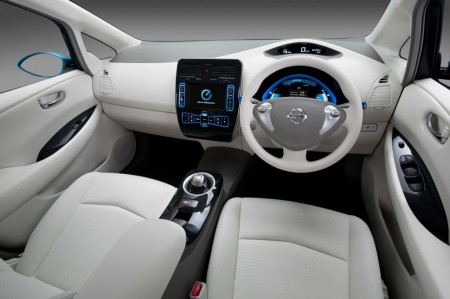
Nissan Leaf Interior
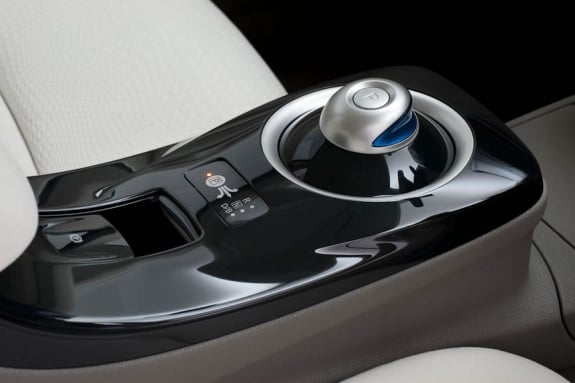
Nissan Leaf Gear
Nissan Leaf Speedometer
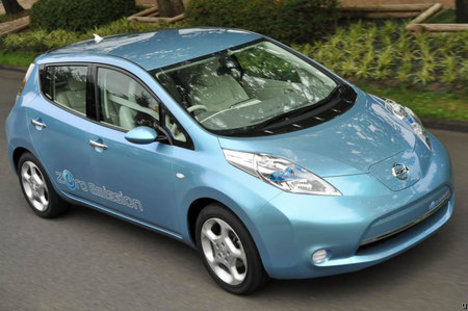
The Leaf's frontal style is characterized by a sharp V-shape design with large, up slanting light-emitting diode (LED) headlights that create a distinctive blue internal reflective design. The headlights also split and redirect airflow away from the door mirrors, which reduces wind noise and drag. The headlights consume 50% less electricity than halogen lamps. Nissan sought not to deter individuals away from the Leaf, giving it a familiar sedan- and hatchback-like design.[33] The bottom of the car has aerodynamic paneling to reduce drag and improve aerodynamics as much as possible. Nissan says that the car has a top speed of over 150 km/h (93 mph). Its motor is rated at 80 kilowatts (110 hp) and 280 newton metres (210 lb·ft). Unofficially, 0 to 60 mph (0 to 97 km/h) performance has been tested at 9.9 seconds. The Leaf uses a front-mounted electric motor driving the wheels, powered by a 86 megajoules (24 kW·h) lithium ion battery pack rated to deliver up to 90 kilowatts (120 hp) power. The pack contains air-cooled, stacked laminar battery cells with lithium manganate cathodes. The battery and control module together weigh 300 kilograms (660 lb) and the specific energy of the cells is 140 W·h/kg. It is estimated that each battery pack costs Nissan US$18,000 (as of May 2010[update]), and this cost is expected to be halved by mass production. Under its five-cycle testing, the United States Environmental Protection Agency found the Leaf's energy consumption to be 765 kJ/km (34 kWh/100 miles) and rated the Leaf combined fuel economy equivalent at 99 MPGe (2.4 L/100 km), with an equivalent 106 mpg-US (2.22 L/100 km; 127 mpg-imp) in city driving and 92 mpg-US (2.6 L/100 km; 110 mpg-imp) on highways. The battery pack is expected to retain 70% to 80% of its capacity after 10 years but its actual lifespan depends on how often fast charging (440-volt) is used and also on environmental factors. Nissan stated the battery has a "lifespan of 5–10 years under normal use". The Leaf's battery is guaranteed by Nissan for eight years or 100,000 miles (160,000 km). The battery pack consists of 48 modules and each module contains four cells and is assembled by Automotive Energy Supply Corporation (AESC) – a joint venture between Nissan, NEC and NEC Energy Devices. Since the battery is the heaviest part of any EV, Nissan housed the battery pack below the rear-seat compartment to keep the center of gravity as low as possible and also results in increased structural rigidity as compared to a conventional five-door hatchback.
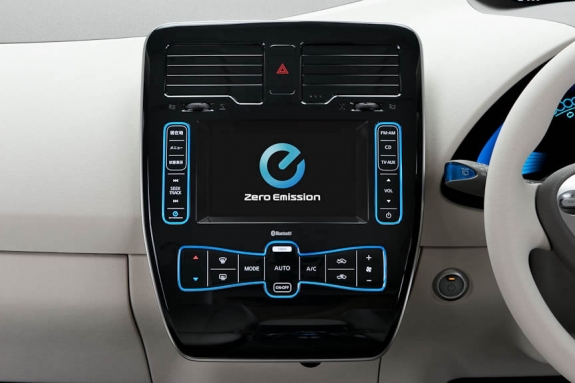
Nissan Leaf Control Medium
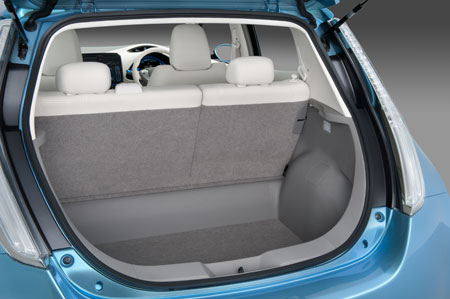
Nissan Leaf Baggage
Nissan LEAF Test Drive and Review
According to Nissan, the Leaf's expected all-electric range is 160 kilometres (100 mi) on the EPA city driving cycle and remains the same as the EV-11 prototype. However, the United States Environmental Protection Agency official range is 117 kilometres (73 mi) based on the five-cycle tests using varying driving conditions and climate controls. The Federal Trade Commission, which is supposed to label all alternative-fuel vehicles, disagrees with the EPA rating, and considers that the correct range is between 96 to 110 miles (154 to 180 km). Although the FTC does not conduct its own tests as EPA does, it relies on a standard set by SAE International and the results reported by automakers.[48] Based on third-party test drives carried out in the US, reviewers have found that the range available from a single charge can vary up to 40% in real-world situations; reports vary from about 100 kilometres (62 mi) to almost 222 kilometres (138 mi) depending on driving style, load, traffic conditions, weather (i.e. wind, atmospheric density), and accessory use. Nissan tested the Leaf under several scenarios to estimate real-world range figures, and obtained a worst case scenario of 76 kilometres (47 mi) and a best case scenario of 222 kilometres (138 mi). The following table summarizes the results under each scenario tested using EPA's L4 test cycle and presents EPA rating as a referenceThe Leaf has two charging receptacles: a standard SAE J1772-2009 connector for level 1 and 2 recharging (120/220 volts AC) and a JARI Level 3 DC connector designed by TEPCO for high-voltage, DC fast charging (480 volts DC 125 amps) that uses the CHAdeMO protocol. Using the on-board 3.3-kilowatt (4.4 hp) charger the Leaf can be fully recharged from empty in 8 hours from a 220/240-volt 30 amp supply (5.2 kilowatts (7.0 hp) allowable draw[58]) that can provide the on-board charger its full 3.3 kilowatts (4.4 hp) of usable power. The Nissan Leaf employs an advanced telematics system called "Carwings" which originally was only available in Japan. The system sends and receives data via a built-in GPRS radio similar to the connectivity of mobile phones. Carwings is connected any time the car is in range of a cell tower and it makes possible several user functionalities, such as position and possible range on a map and which charging stations are available within range. The system also tracks and compiles statistics about distance traveled and energy consumption and produces daily, monthly and annual reports of these and several other operational parameters. All information is available in the Leaf's digital screens. Users' mobile phones can be used to turn on the air-conditioner and heater, and reset charging functions even when the vehicle is powered down. This can be used to pre-heat or pre-cool the car prior to use. The advantage of doing this while still connected is so it does not discharge the battery and sets the climate before use. An on-board remote-controlled timer can also be pre-programmed to recharge batteries at a set time such as during off-peak rates. The Leaf's SL trim has a small solar panel at the rear of the roof/spoiler that can trickle charge the auxiliary battery.
 The Nissan Clipper nameplate has been used for two separate commercial vehicle ranges. Originally this was just a relabelled version of Prince's "Clipper" light/medium duty commercial vehicle range. In 2003 the nameplate was revived for a relabelled version of the Mitsubishi Minicab, a Kei truck provided in an OEM deal.
 This had begun with the AKTG Prince Cabover truck of May 1954, with the Clipper label first introduced on the 1.5-litre AQTI series of October 1958.[1] The Clipper featured a distinct frontal treatment, with six oval openings for cooling. In February 1961, the BQTI "Super Clipper" with a larger 1.9-litre engine was added to the lineup. In January 1963 the modified T630/T631 Clipper/Super Clipper was introduced, featuring quadruple headlights. Engines remained the same as before, albeit with a bit more power: a 73 PS (54 kW) 1,484 cc four for the T630 and a 1,862 cc unit with 96 PS (71 kW) for the T631 Super Clipper.
 In April 1966, following the merger of Nissan and Prince's operations, the truck was renamed Nissan Clipper (T65). Again, the front treatment was unusual; the front featured four large chrome-ringed ovals, two of which were for cooling and two held the lights. The T65 also received a 1,982 cc Nissan H20 four-cylinder petrol engine. In January 1973 the new T40 series replaced the T631, but it was shortlived. The next (and last) generation Clipper was the C340 of May 1976, but this was merely a rebadged Nissan Caball. The line came to an end in December 1981, when Nissan's commercial truck range was rationalized. The H40 Nissan Atlas replaced both the Clipper and the Caball.
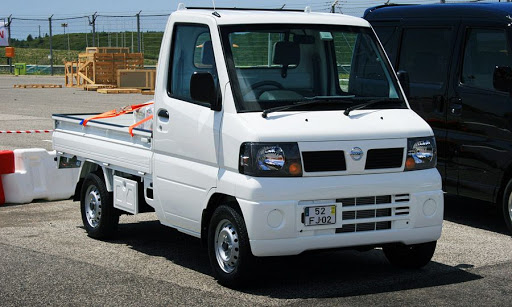 Nissan Clipper
 Nissan Clipper