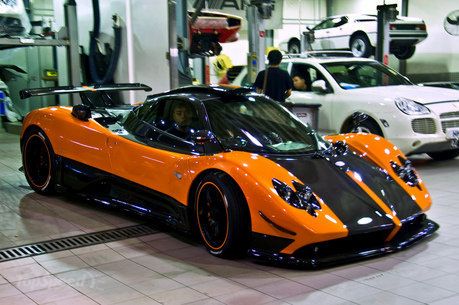
The final Zonda in its current form is a combination of the Zonda F and Zonda R to create a road-going track-day car.Built at the repeated request of the Hong Kong–based Pagani dealer, SPS Automotive Performance (in fact, initially it had to be called Zonda SPS), only five will be built at the cost of £1 million, with deliveries expected by June 2009 for all five cars.The differences over other road-going Zondas are the new 6-speed sequential gearbox, resulting in shifts now taking less than 100 milliseconds, dropping 0–62 mph down to 3.4 seconds, the Cinque also has a revised form of carbon fibre called "carbo-titanium" which incorporates titanium to increase strength and rigidity. Suspension makes use of magnesium and titanium components, and the engine's power has been increased to 678 bhp (506 kW). Revised bodywork, which includes a longer front splitter, new sideskirts, rear diffuser, bumper canards and a flatter underside as well as a roof-mounted air intake scoop, now creates 750 kg (1,653 lb) of downforce at 300 km/h (186 mph), allowing the Cinque to generate 1.45 G of cornering force.
Pages
Pagani Zonda Cinque
The final Zonda in its current form is a combination of the Zonda F and Zonda R to create a road-going track-day car.Built at the repeated request of the Hong Kong–based Pagani dealer, SPS Automotive Performance (in fact, initially it had to be called Zonda SPS), only five will be built at the cost of £1 million, with deliveries expected by June 2009 for all five cars.The differences over other road-going Zondas are the new 6-speed sequential gearbox, resulting in shifts now taking less than 100 milliseconds, dropping 0–62 mph down to 3.4 seconds, the Cinque also has a revised form of carbon fibre called "carbo-titanium" which incorporates titanium to increase strength and rigidity. Suspension makes use of magnesium and titanium components, and the engine's power has been increased to 678 bhp (506 kW). Revised bodywork, which includes a longer front splitter, new sideskirts, rear diffuser, bumper canards and a flatter underside as well as a roof-mounted air intake scoop, now creates 750 kg (1,653 lb) of downforce at 300 km/h (186 mph), allowing the Cinque to generate 1.45 G of cornering force.
Pagani Zonda C12 S
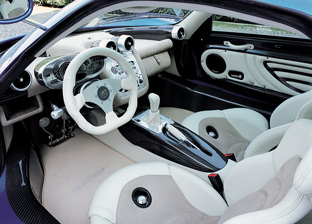
The Zonda C12 debuted at the 1999 Geneva Motor Show. It was powered by a 5,987 cc (365 cu in) Mercedes-Benz M120 V12 engine producing 389 hp (290 kW; 394 PS) at 5200 rpm and 420 lb·ft (569 N·m) at 3800 rpm mated to a 5-speed manual transmission gearbox.Just five of the original 6.0 L Zondas were built, though it was still available in 2002 when the C12 S debuted. One was used for crash testing, while another was a demonstrator and show car. The remainder were delivered to customers during the next three years, priced at US$320,000.The C12 could accelerate to 60 mph (97 km/h) in 4.2 seconds and hit 100 mph (160 km/h) in 9.2 seconds. Acceleration through the quarter mile was 12.2 seconds at 123 mph (198 km/h). Lateral acceleration on the skidpad was 0.93 g, and the car could brake from 60 mph (97 km/h) in 110 feet (34 m).
Pagani Zonda C12 S
Red Pagani Zonda C12 S Looks so Cool
Blue Pagani Zonda C12 S Hatchback
Toyota Mark X
Toyota Mark X Auto Park (swearing muted)
The Mark X (Japanese: トヨタ・マークX) is a mid size automobile created by Toyota for the Japanese market. The Mark X was introduced in 2004 and is manufactured in Kanegasaki, Iwate, Japan. Also sold in China as the Reiz, it is available with either a 253 horsepower (189 kW) 3.0 L or 212 horsepower (158 kW) 2.5 L GR series V6 engine. Both engines offer dual VVT-i (variable valve timing) with gasoline direct injection(Japanese models only). The rear-wheel drive models have a 6-speed automatic transmission as standard, and the all-wheel drive models have a 5-speed automatic.The Mark X is the successor to the Mark II which was first introduced in 1968, was known in the North American market as the Corona Mark II starting in 1972 and the Cressida from 1977 to 1992 and was the predecessor to the introduction of Lexus. The Mark X is not pronounced "Mark Ten" but "Mark Ex", though the Mark II is "Mark Two". The Mark X is an alternative to the Toyota Camry for buyers who like the size of the Camry, but prefer a front engine rear drive powertrain with the option to add all wheel drive, which the Camry doesn't offer. The Mark X is a combination of previous Mark II siblings, the sport oriented Toyota Chaser, and the luxurious Toyota Cresta in one vehicle, letting the Camry appeal to buyers who traditionally purchased the conservatively styled and equipped Mark II in the past, repeating an approach previously attempted by the short lived Toyota Verossa that used straight 6 engines, whereas the Mark X uses V6 engines.Both the first and second generation Mark X were manufactured at the Motomachi Plant in Japan.
Emazing Red Toyota Mark X
White Toyota Mark X Show View
Toyota Land Cruiser Prado
Toyota Land Cruiser Prado 2010
Jaguar XF

Jaguar XF
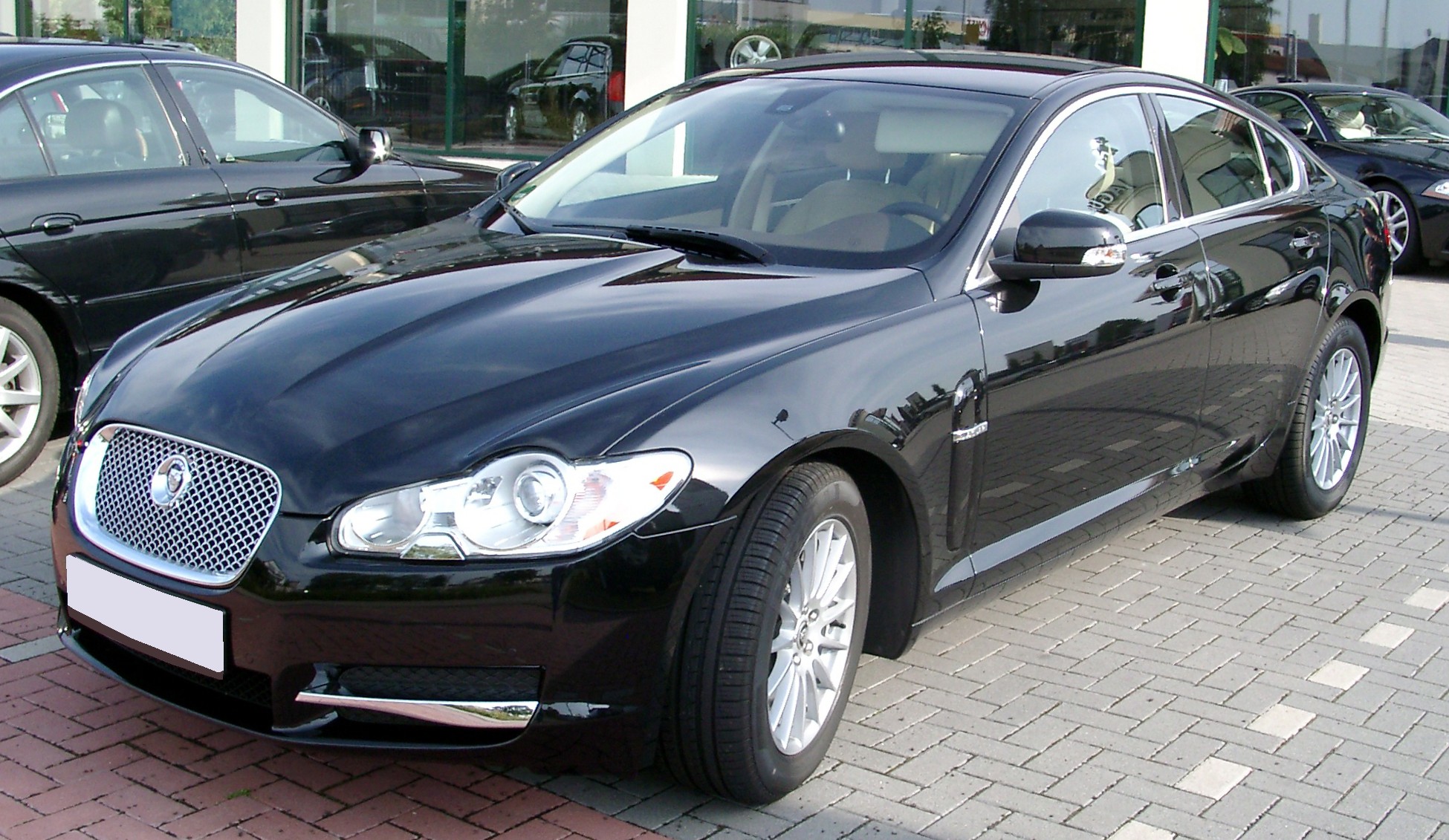
The Jaguar XF (type (X250) is a mid-size luxury car / sports saloon produced by British car manufacturer Jaguar. The car, which replaced the Jaguar S-Type, was launched at the 2007 Frankfurt Motor Show following the public showing of the C-XF concept in January 2007 at the North American International Auto Show. Designed by Jaguar's design director Ian Callum,it was a significant change to its predecessor.The XF went on sale in 2008 with a range of V6 and V8 engines and customer deliveries commenced in March 2008.A face-lifted XF featuring a revised front design more akin to the original C-XF concept car was announced at the 2011 New York Auto Show with manufacturing to commence from July 2011.
Jaguar XF vs BMW 550i
Silver Jaguar XF Hatchback
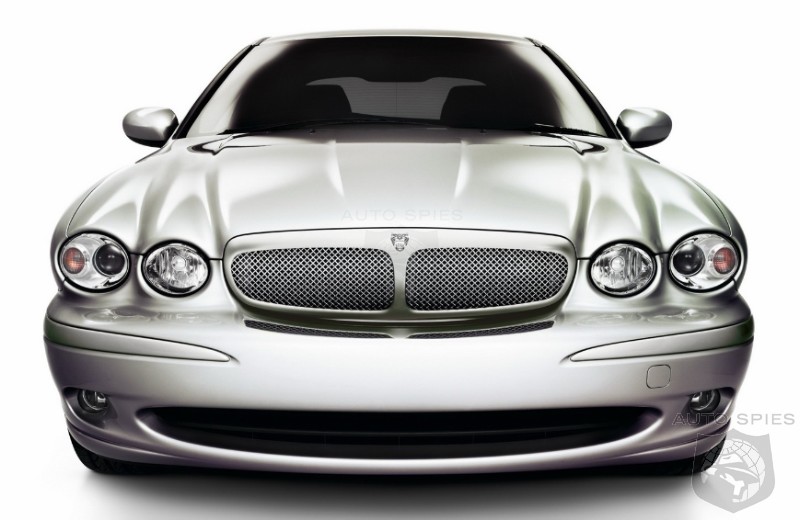
Jaguar X-Type
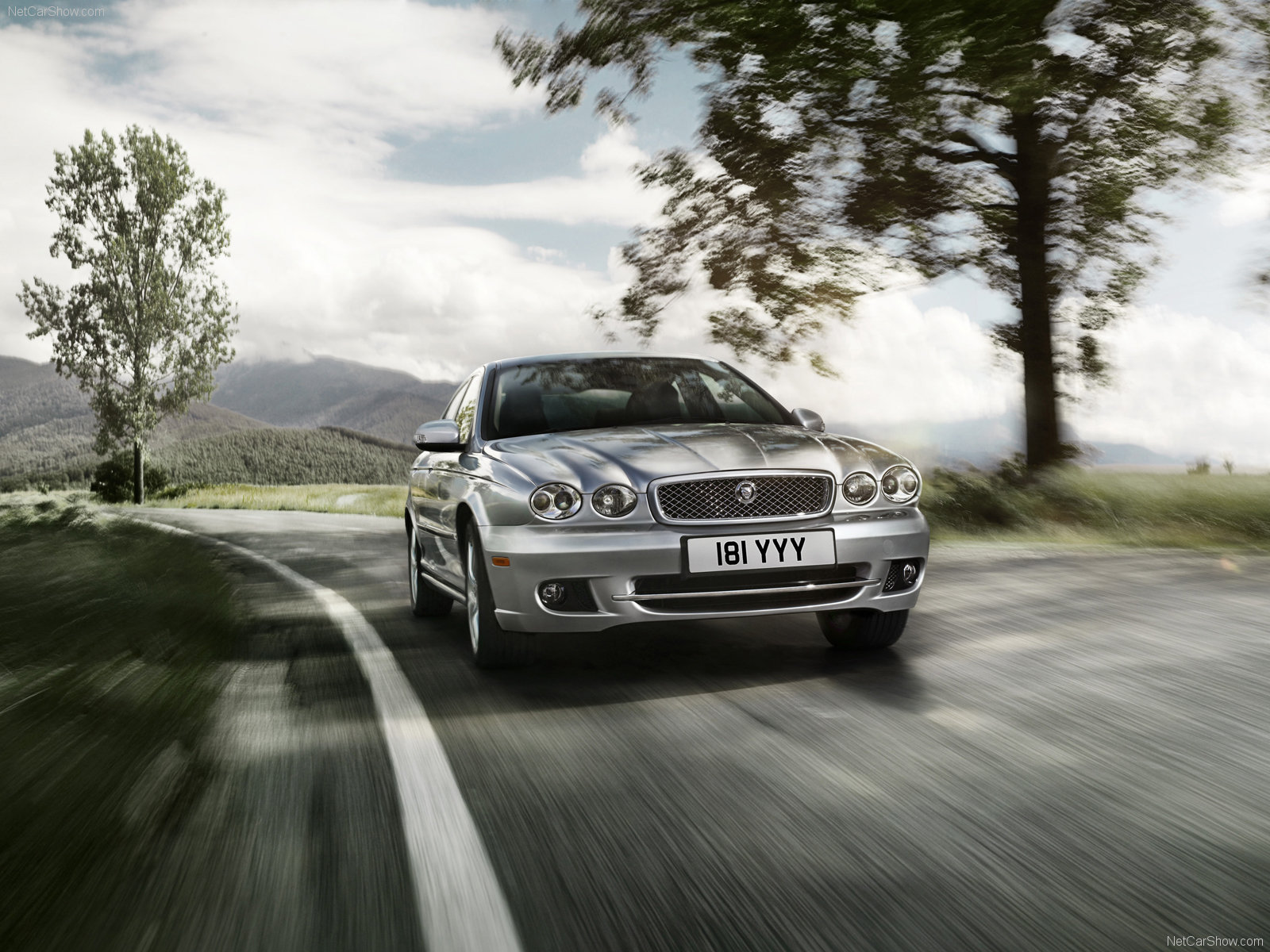
Jaguar X-type drives down a ski slope
Jaguar XJR
Subscribe to:
Posts (Atom)