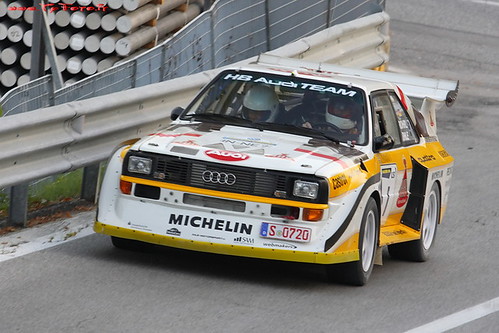
The Audi S8 quattro is a high-performance version of the German luxury automaker Audi's flagship car, the full-size Audi A8. The S8 is produced at Audi's Neckarsulm 'aluminium plant', and it was introduced in September 1994. Like the A8, the S8 is only available as a four-door saloon/sedan, and both generations have been constructed from an all-aluminium monocoque, dubbed the "Audi Space Frame" (ASF), the S8 using the standard wheelbase platform, and is not available in the long-wheelbase of the A8L.
 In September 1994, according to the official electronic parts catalogue for the Volkswagen Group, Audi introduced the Audi S8 4.2 quattro (Typ 4D) into the European market with a six-speed manual transmission, and a year later with tiptronic five-speed automatic transmission - a high-performance version of the Audi A8 in the vein of Mercedes-Benz AMG models, sharing the A8's all-aluminium monocoque "Audi Space Frame" (ASF), and Volkswagen Group D2 platform.
 In the UK the S8 was only available with an automatic gearbox.At the same time of the A8's facelift in late 1999, the S8 received the same cosmetic upgrades. This was the first model to be introduced to the North American market.Production of this original S8 ended in September 2002, shortly before the introduction of the current D3-platform A8.The D2 S8 was also featured in the 1998 film Ronin.
 Motive power in the D2 S8 powertrain featured an uprated, 250 kilowatts (340 PS; 335 bhp) version of the standard 4 Valves per Cylinder 4,172 cubic centimetres (254.6 cu in) 90° V8(AKZ) petrol engine (parts code: 077, identification codes: AKH, AHC). From late 1999, the engine was given a further 5 valves & power increase to 265 kilowatts (360 PS; 355 bhp) at 7,000 rpm, and 430 newton metres (317 ft·lbf) of torque at 3,400 rpm (identification codes: AQH, AVP, AYS, BCS). The AHC Code engine was the only 4 valve V8 and featured different exhaust cams, Different Ecu tune, and a higher compression compared to the ABZ(300)bhp engine of the A8. All S8 engines from 99-on had 5 valves per cylinder and compression bump to 11.0:1 from 10.8 giving the S8 355 BHP.
 A sports-recalibrated version of the ZF 5HP24 five-speed tiptronic automatic transmission (parts code: 01L, identification codes: DYM, ECX) (gear ratios - 1st: 3.571, 2nd: 2.200, 3rd: 1.505, 4th: 1.000, 5th: 0.804), featuring "Dynamic Shift Programme" (DSP) was standard. European-market models also had a six-speed manual transmission option (parts code: 01E, identification code: DGV).Torsen T-2 based quattro permanent four-wheel drive was also standard. Final drive ratio (for automatic transmission) is 3.730.
 A retuned, 20 millimetres (0.8 in) lowered sports suspension included a 30% stiffer spring rate and 40% more compression damping in the shock absorbers. Speed-sensitive "servotronic" power assisted steering was also standard.The brakes featured Bosch ABS 5.3 Anti-lock Braking System, with Electronic Brakeforce Distribution (EBD), and worked radially ventilated front discs of 345 millimetres (13.58 in) in diameter by 30 mm (1.18 in) thick. The rear vented discs measured 280 mm (11.02 in) by 22 mm (0.87 in). From 2002, an upgraded Bosch ESP 5.7 Electronic Stability Programme became standard fitment.Standard alloy wheels were 8Jx18" cast aluminium alloy "Avus" 6-spoke style, with 245/45 ZR18 Dunlop SP Sport 8000 or Bridgestone Potenza RE040 performance tyres. From 1999 model year, an 8.5Jx20" polished "9-spoke RS" wheel became an option, shod with 255/35 ZR20 Michelin Pilot Sport tyres. In 2003, 8Jx18" polished 9-spoke RS wheels became a no-cost option road wheel.
 The Audi RS4 quattro is the top tier and highest performing version of some specific generations of the Audi A4 range of automobiles. It is a sports-focused compact executive car (often called sport compact in some countries), produced by Audi's high-performance private subsidiary quattro GmbH, in limited numbers, for German car manufacturer AUDI AG, part of the larger Volkswagen Group. It slots distinctly above the Audi S4, as the fastest, most sports-focused model based on the A4's "B" automobile platform.
 The original B5 version was only produced as a five-door five-seat "Avant", Audi's name for an estate car/station wagon. The second version, the B7, was released initially as a four-door five-seat saloon/sedan, with the Avant following a short while later. A two-door four-seat Cabriolet version was subsequently added. Furthermore, their unique internal combustion engines are all front-mounted, and are longitudinally oriented. The transmission is mounted immediately at the rear of the engine in a longitudinal orientation, in the form of a transaxle, and contains both a center and front differential.
 The "RS" initials are taken from the German: RennSport – literally translated as "racing sport", and is the Audi marque's highest trim level, positioned above the "S" model specification of Audi's regular model line-up. Like all Audi "RS" cars, the RS4 pioneers some of Audi's latest advanced technology, and could therefore be described as a "halo vehicle". Furthermore, it is only available with Audi's Torsen-based 'trademark' quattro permanent four-wheel drive system.Its main market competitors initially included the BMW M3, and the Mercedes-Benz C63 AMG, and could also include the Lexus IS-F.
 The original B5 Audi RS4 Avant quattro (Typ 8D) was introduced by AUDI AG in late 1999, for main production and sale from 2000, as the successor to the Porsche / quattro GmbH joint venture-developed Audi RS2 Avant. The vehicle, like its RS2 predecessor, was available only as an Avant (Audi's name for an estate car/station wagon), and was built on an existing platform, in this case the Volkswagen Group B5 platform shared with the A4 and S4. Retail price was around Deutsche Mark 103,584. The RS4 was available for sale in most of Europe, parts of Asia and in some Latin American countries.Audi produced 6,030 units between 1999 and 2001.
 Although related to the Audi B5 S4, many of the outer body panels are altered, with wider front and rear wheel arches, to allow for the wider axle track on the RS4. With unique front and rear bumpers, and side sills, and sharing the rear spoiler from the S4 Avant, the aerodynamic modifications achieved a drag coefficient of Cd 0.34. Although the B5 S4 came in a saloon car body style, the B5 RS4 was only available in the Avant version.Luggage space, measured according to the industry standard VDA method is 390 litres (13.8 cu ft) with the rear seats in the upright position, and 1,250 litres (44.1 cu ft) with the seats folded flat.
 For the powertrain detail of the B5 RS4, its motive power came from a modified version of the B5 S4's 2.7 litre V6 'biturbo'—a 2,671 cubic centimetres (163.0 cu in), 30 valve (five valves per cylinder) 90° V6 engine (parts code prefix: 078; identification codes: early version: 2000 ASJ, EU2 compliant, and later version: 2000-01 AZR, to EU3 standard).
 The Audi TT is a two-door sports car manufactured by the German automaker and Volkswagen Group subsidiary Audi since 1998.The Audi TT has been produced in two generations. Both generations have been available in two car body styles; as a 2+2 Coupé, or two-seater Roadster. They have been built on consecutive generations of the Volkswagen Group A platform, starting with the A4 (PQ34). As a result of this platform-sharing, the Audi TT has identical powertrain and suspension layouts as its related platform-mates; this includes a front-mounted transversely oriented engine, front-wheel drive or quattro permanent four-wheel drive system, and fully independent front suspension using MacPherson struts.
 Both generations of TT are assembled by the Audi subsidiary Audi Hungaria Motor Kft. in Győr, Hungary, using bodyshells manufactured and painted at Audi's Ingolstadt plant.
 The styling of the Audi TT began in the spring of 1994 at the Volkswagen Group Design Center in California.The TT was first shown as a concept car at the 1995 Frankfurt Motor Show. The design is credited to J Mays and Freeman Thomas, with Hartmut Warkuss, Peter Schreyer,Martin Smith and Romulus Rost contributing to the award-winning interior design.
 A previously unused laser beam welding adaptation, which enabled seamless design features on the first-generation TT, delayed its introduction. Audi did not initially offer any type of automatic transmission option for the TT. However, from 2003, a dual clutch six-speed Direct-Shift Gearbox (DSG) became available, with the United Kingdom TT variants becoming the world's first user of a dual clutch transmission configured for a right-hand drive vehicle, although the outright world first for a road car equipped with a dual clutch transmission was claimed earlier by a Volkswagen Group platform-mate, the left hand drive Volkswagen Golf Mk4 R32.
 The Audi TT takes its name from the successful motor racing tradition of NSU in the British Isle of Man TT (Tourist Trophy) motorcycle race. NSU began competing in the TT in 1911, and later merged into the company now known as Audi.The Audi TT also follows the NSU 1000TT, 1200TT and TTS cars of the 1960s in taking their names from the race.The TT name has also been attributed to the phrase "Technology & Tradition".
 The production model (internal designation Typ 8N) was launched as a Coupé in September 1998, followed by a Roadster in August 1999. It is based on the Volkswagen Group A4 (PQ34) platform as used for the Volkswagen Golf Mk4, the original Audi A3, the Škoda Octavia, and others. The styling differed little from the concept, except for slightly reprofiled bumpers, and the addition of a rear quarterlight windows behind the doors. Factory production commenced October 1998.
 Early TT models gained press coverage for a series of high-speed accidents in Europe. Reported crashes and related fatalities occurred at speeds in excess of 180 kilometres per hour (110 mph), during abrupt lane changes or sharp turns. Both the Coupé and Roadster models were recalled in late 1999/early 2000, to improve predictability of the car's handling at very high speeds. Audi's Electronic Stability Programme, and rear spoiler were added, along with suspension modifications. All changes were subsequently incorporated into future series production versions of the car.Factory production of this generation ended in June 2006.
Audi RS6 Vs. BMW M5
 All About Audi RS6
 Red Audi RS6 Fast Car
 Elegant White Audi RS6
 Elegant Yellow Audi TT Coupe
 Luxury Silver Audi TT Coupe
 Driving Interior Audi TT Coupe
 Audi TT Coupe Red Sporty
 White Audi TT Coupe
 Silver Audi TT Coupe On The road
  Audi TT Coupe Fast Car
  Audi S7 Tatoo
 Grey Audi S7 Hatchback
  Audi S7 Fast Car
 Luxury Silver Audi S7
 Red Audi S7 Concept
  Audi S7 Front View
 Audi S7 Performance
 Audi RS5 Fast Car
 Audi RS5 On The Road
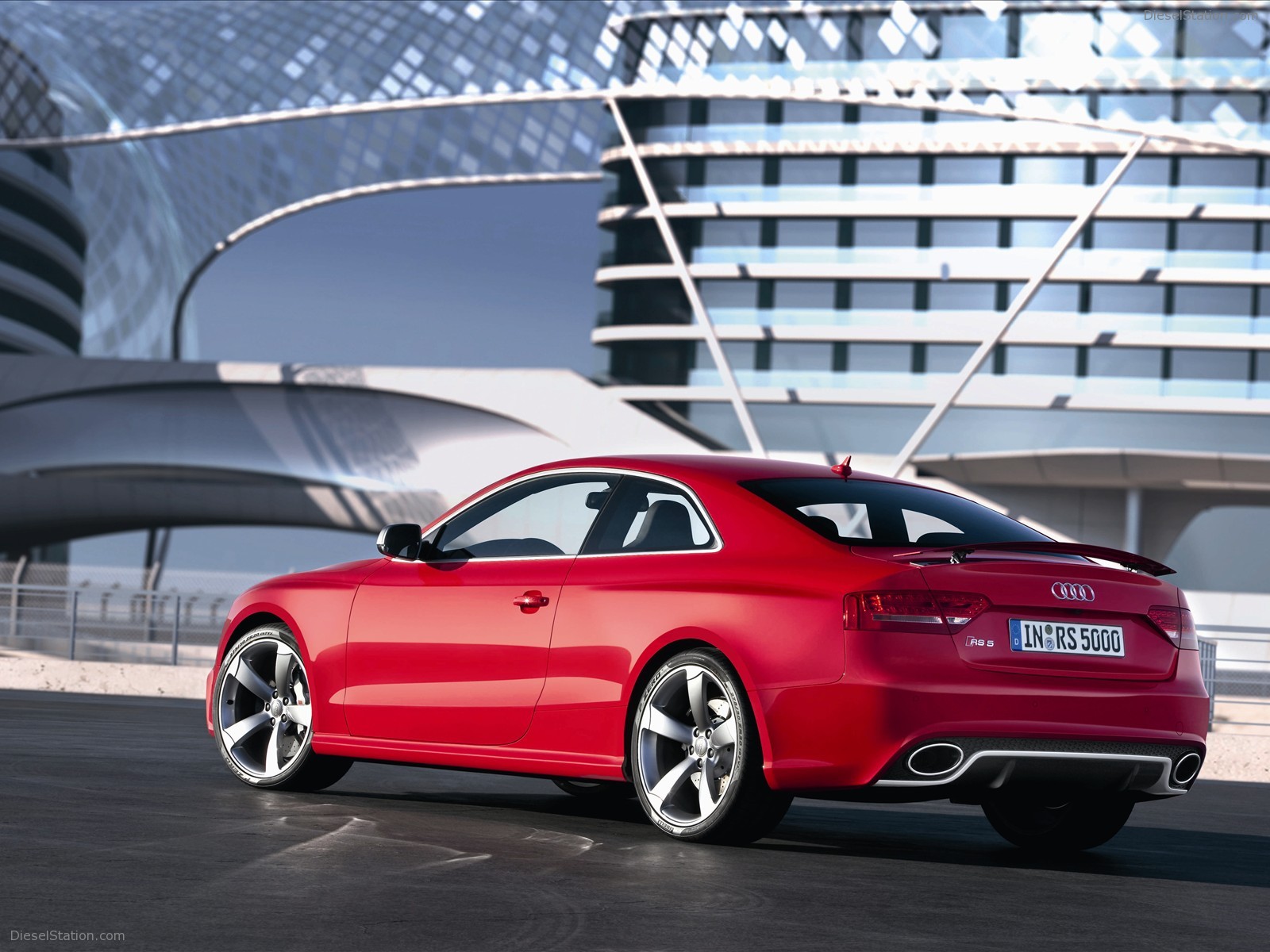 Elegant Red Audi RS5
 Luxury Silver Audi RS5
 Blue Audi RS5 Concept
 Elegant Interior Audi RS5
 Amazing Red Audi RS5
 The Audi S8 quattro is a high-performance version of the German luxury automaker Audi's flagship car, the full-size Audi A8. The S8 is produced at Audi's Neckarsulm 'aluminium plant', and it was introduced in September 1994. Like the A8, the S8 is only available as a four-door saloon/sedan, and both generations have been constructed from an all-aluminium monocoque, dubbed the "Audi Space Frame" (ASF), the S8 using the standard wheelbase platform, and is not available in the long-wheelbase of the A8L.
 In September 1994, according to the official electronic parts catalogue for the Volkswagen Group, Audi introduced the Audi S8 4.2 quattro (Typ 4D) into the European market with a six-speed manual transmission, and a year later with tiptronic five-speed automatic transmission - a high-performance version of the Audi A8 in the vein of Mercedes-Benz AMG models, sharing the A8's all-aluminium monocoque "Audi Space Frame" (ASF), and Volkswagen Group D2 platform.
 In the UK the S8 was only available with an automatic gearbox.
 Motive power in the D2 S8 powertrain featured an uprated, 250 kilowatts (340 PS; 335 bhp) version of the standard 4 Valves per Cylinder 4,172 cubic centimetres (254.6 cu in) 90° V8(AKZ) petrol engine (parts code: 077, identification codes: AKH, AHC). From late 1999, the engine was given a further 5 valves & power increase to 265 kilowatts (360 PS; 355 bhp) at 7,000 rpm, and 430 newton metres (317 ft·lbf) of torque at 3,400 rpm (identification codes: AQH, AVP, AYS, BCS). The AHC Code engine was the only 4 valve V8 and featured different exhaust cams, Different Ecu tune, and a higher compression compared to the ABZ(300)bhp engine of the A8. All S8 engines from 99-on had 5 valves per cylinder and compression bump to 11.0:1 from 10.8 giving the S8 355 BHP.
 A retuned, 20 millimetres (0.8 in) lowered sports suspension included a 30% stiffer spring rate and 40% more compression damping in the shock absorbers. Speed-sensitive "servotronic" power assisted steering was also standard.
 The "RS" initials are taken from the German: RennSport – literally translated as "racing sport", and is the Audi marque's highest trim level, positioned above the "S" model specification of Audi's regular model line-up. Like all Audi "RS" cars, the RS4 pioneers some of Audi's latest advanced technology, and could therefore be described as a "halo vehicle". Furthermore, it is only available with Audi's Torsen-based 'trademark' quattro permanent four-wheel drive system.Its main market competitors initially included the BMW M3, and the Mercedes-Benz C63 AMG, and could also include the Lexus IS-F.
 For the powertrain detail of the B5 RS4, its motive power came from a modified version of the B5 S4's 2.7 litre V6 'biturbo'—a 2,671 cubic centimetres (163.0 cu in), 30 valve (five valves per cylinder) 90° V6 engine (parts code prefix: 078; identification codes: early version: 2000 ASJ, EU2 compliant, and later version: 2000-01 AZR, to EU3 standard).
 The Audi TT is a two-door sports car manufactured by the German automaker and Volkswagen Group subsidiary Audi since 1998.The Audi TT has been produced in two generations. Both generations have been available in two car body styles; as a 2+2 Coupé, or two-seater Roadster. They have been built on consecutive generations of the Volkswagen Group A platform, starting with the A4 (PQ34). As a result of this platform-sharing, the Audi TT has identical powertrain and suspension layouts as its related platform-mates; this includes a front-mounted transversely oriented engine, front-wheel drive or quattro permanent four-wheel drive system, and fully independent front suspension using MacPherson struts.
 Both generations of TT are assembled by the Audi subsidiary Audi Hungaria Motor Kft. in Győr, Hungary, using bodyshells manufactured and painted at Audi's Ingolstadt plant.
 The styling of the Audi TT began in the spring of 1994 at the Volkswagen Group Design Center in California.The TT was first shown as a concept car at the 1995 Frankfurt Motor Show. The design is credited to J Mays and Freeman Thomas, with Hartmut Warkuss, Peter Schreyer,Martin Smith and Romulus Rost contributing to the award-winning interior design.
 A previously unused laser beam welding adaptation, which enabled seamless design features on the first-generation TT, delayed its introduction. Audi did not initially offer any type of automatic transmission option for the TT. However, from 2003, a dual clutch six-speed Direct-Shift Gearbox (DSG) became available, with the United Kingdom TT variants becoming the world's first user of a dual clutch transmission configured for a right-hand drive vehicle, although the outright world first for a road car equipped with a dual clutch transmission was claimed earlier by a Volkswagen Group platform-mate, the left hand drive Volkswagen Golf Mk4 R32.
 Early TT models gained press coverage for a series of high-speed accidents in Europe. Reported crashes and related fatalities occurred at speeds in excess of 180 kilometres per hour (110 mph), during abrupt lane changes or sharp turns. Both the Coupé and Roadster models were recalled in late 1999/early 2000, to improve predictability of the car's handling at very high speeds. Audi's Electronic Stability Programme, and rear spoiler were added, along with suspension modifications. All changes were subsequently incorporated into future series production versions of the car.Factory production of this generation ended in June 2006.
 Luxury Silver Audi S7
  White Audi S7 Concept
 Elegant Grey Audi S7
  Silver Audi S7 Front view
 Audi S7 Look So Sporty